
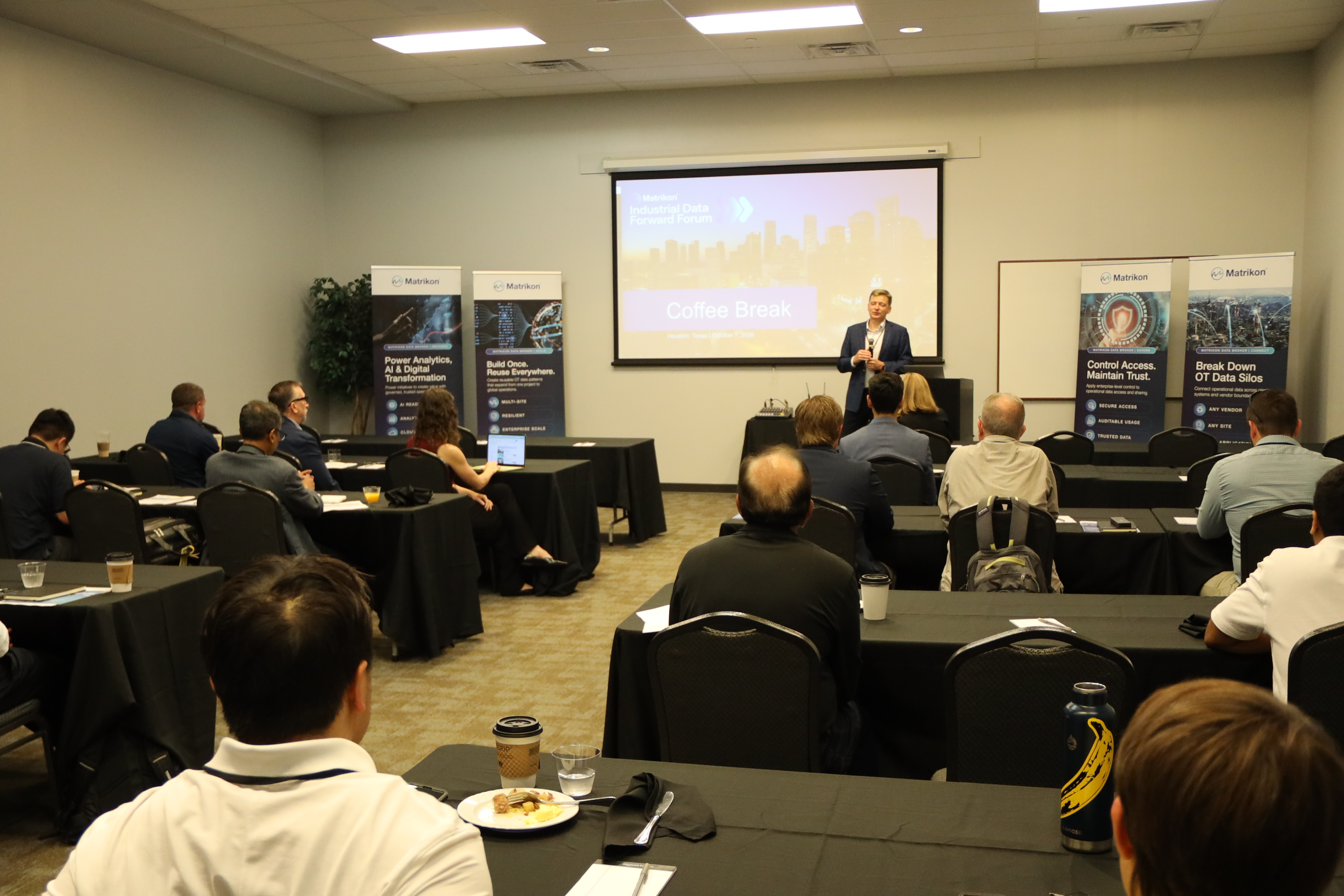
Industrial organizations face many practical challenges. One of the most prevalent is making room for new capabilities while protecting the systems and processes they already depend on. AI, enterprise analytics, and open automation add urgency to that work, but also raise questions about data access, security, and long-term flexibility.
And though almost every organization is fighting this uphill battle, operations and technical leaders rarely have a chance to speak candidly with each other about the process. But we believe that evolving heavy industry and unlocking true operational data transparency requires understanding the problem from every angle and collaborating on how to move forward as an industry.
Carving out intention space for education and collaboration
So, we created the Industrial Data Forward Forum to serve as a much-needed space for candid conversation across the industry. Rather than making the day all about Matrikon and what our solution offers, we brought in leaders from every corner of the industrial data ecosystem to discuss what’s working, what’s still difficult, and where these architectures are heading.
Industry analysts, standards organizations, technology providers, and industrial practitioners from every background and industry applied their own vantage point to the same set of problems. And the conversations couldn’t have been better.
The audience asked questions they’d been thinking about for months, to people with the perspective and experience to answer them. To kick off the event from one shared vantage point, our morning sessions focused on the market as it exists now, OPC UA’s expanding role in the industrial enterprise, how to build a governed enterprise OT data foundation, edge AI, and open process automation.
Exploring these topics in sequence gave everyone the same baseline before the afternoon went deeper. Every session built on the last, forming a digestible narrative of how operational data moves from the plant floor to the enterprise, and what has to be true at each step.
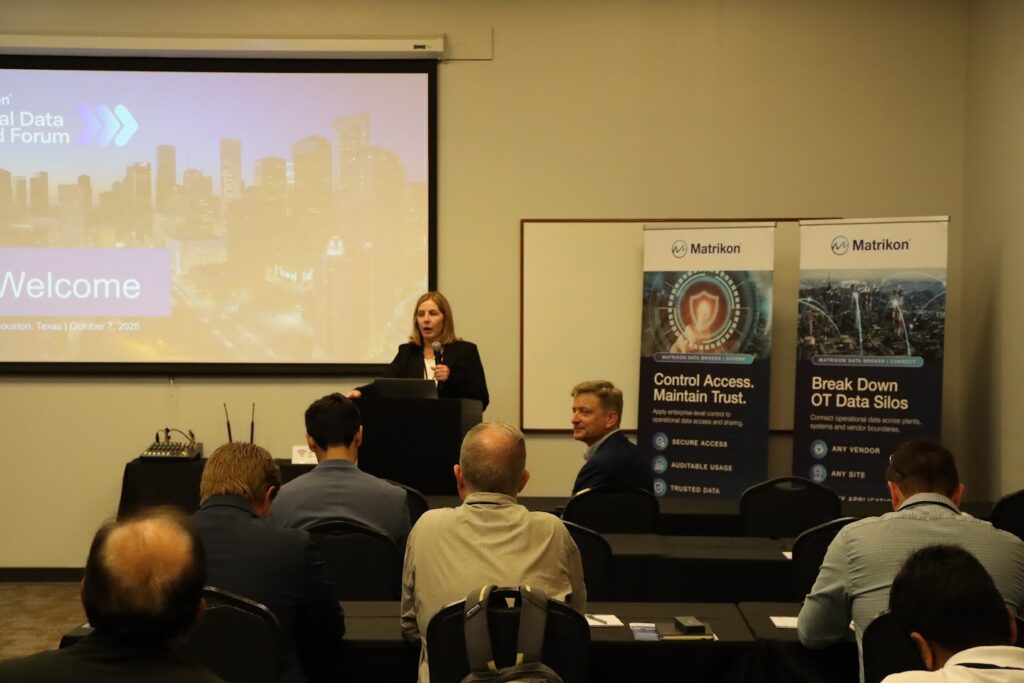
Morning session: The foundations of industrial modernization
The morning sessions approached modernization from several perspectives, moving from the industry outlook to standards, governed data access, edge AI, and open process automation.
Starting With the Business Context
Richard Karpinski of S&P Global / 451 Research provided the industry and market outlook, setting the context for the architecture and technology sessions that followed.
The broader program addressed a familiar tension. Organizations need to support new business initiatives without adding unnecessary complexity or increasing operational risk. That framing kept the focus on what modernization needs to accomplish, alongside the technologies available to support it.
Making OT Data More Useful
Mike Clark of the OPC Foundation addressed OPC UA’s expanding role in the industrial enterprise. Darek Kominek of Matrikon followed with a session on building a governed enterprise OT data foundation.
These topics connected two priorities: enabling systems to work together and making operational data accessible, meaningful, and consistently managed across the enterprise. For organizations planning beyond a single project, the focus shifted from connecting systems to building a foundation that can support additional users and applications over time.
Connecting Data to Applications
Lindi Salasko of Orilla addressed edge AI and value at the data source, while Don Bartusiak of Collaborative Systems Integration presented on open process automation in practice.
The sessions brought an application-focused perspective to the morning’s data and architecture themes. Attendees considered AI readiness and open automation alongside the foundations they depend on, rather than as separate technology conversations.
Separating into groups for more targeted conversations
With everyone working from the same context, we split into two tracks for the rest of the day. Both continued the morning’s modernization theme, but addressed different responsibilities: the people deciding how operational data gets structured across an enterprise, and the people building the products that have to participate in it.
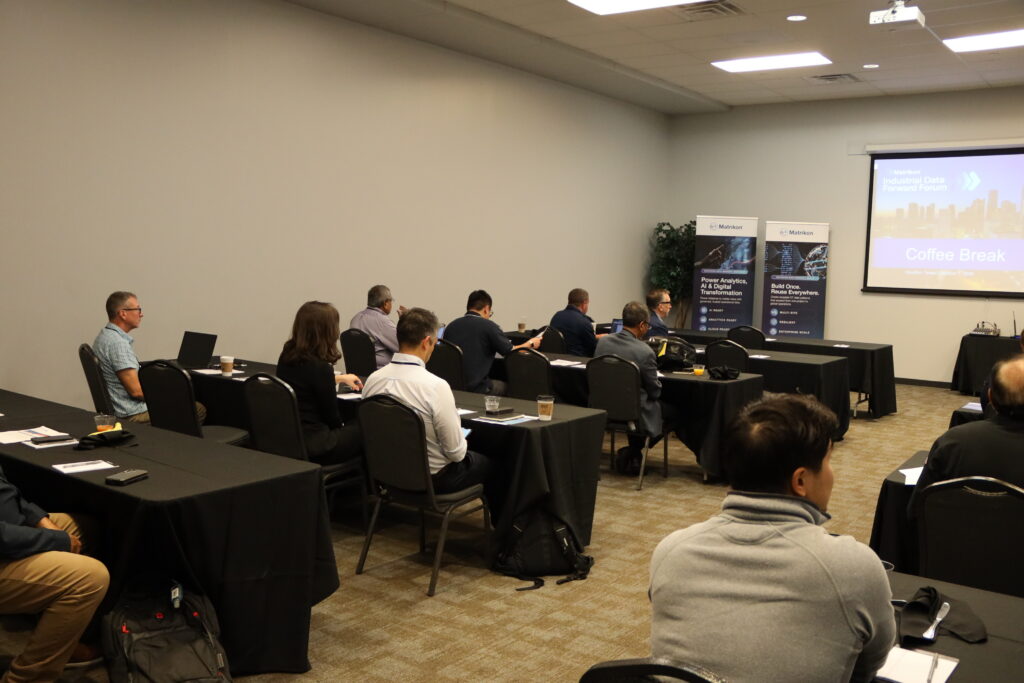
Track A: Enterprise Data & Architecture
Track A was built for enterprise, OT, and IT architects, transformation leaders, operations and engineering leaders, and system integrators — the people who have to reconcile a modernization mandate with the environment they already run.
Modernization and Risk
Richard Karpinski of S&P Global / 451 Research opened the track by moderating a discussion on modernization without increasing risk, carrying the morning’s market context into the afternoon’s architecture focus.
The session addressed the tension that brought most attendees to Houston: organizations need to support new initiatives without adding complexity or exposure to environments that already work. That framing set up the sessions that followed, where the question shifted from whether to modernize to how to sequence it.
Architecture and Platform Direction
Mohammad Areef Penukonda of Matrikon presented an architecture overview covering core components and the Matrikon Data Broker roadmap.
The session moved the morning’s conceptual discussion of a governed enterprise OT data foundation into structural detail. For architects weighing a shared data layer against another project-specific build, it connected the enterprise case made earlier in the day with the components required to deliver it.
From Architecture to Delivery
Mark Halder of Matrikon addressed project velocity by design, focusing on what sets industrial data projects up to move quickly.
The session took up a gap the morning sessions had left open: a sound architecture and a delivered one are not the same thing. Decisions made early either reduce rework later or create it, and those patterns tend to repeat across organizations regardless of how good the design is.
Closing the Loop
The track closed with Richard Karpinski and Darek Kominek reflecting on what the day surfaced — the questions that came up repeatedly, the points of disagreement, and where the conversation goes next.
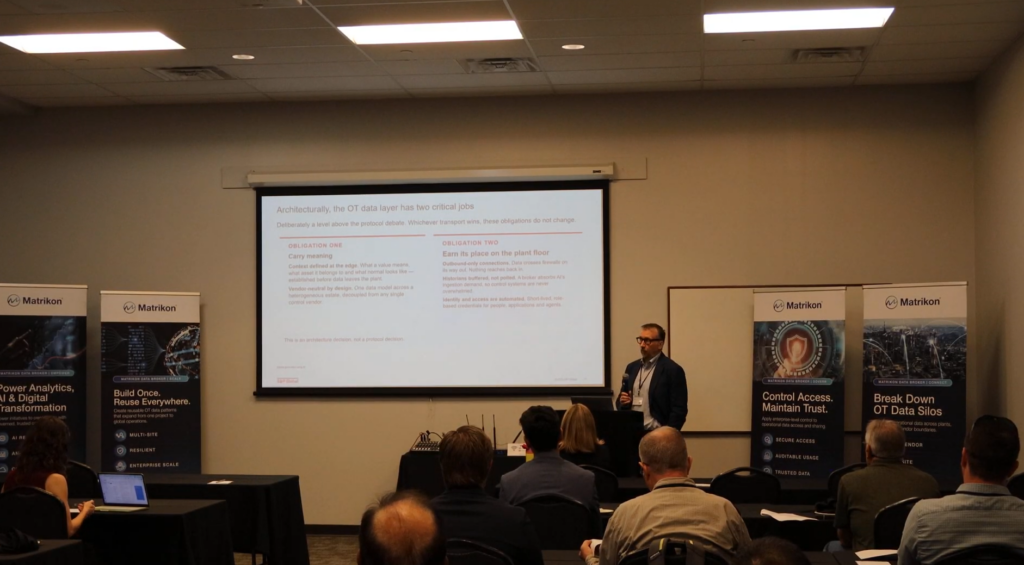
Track B: Open Automation & Development
Standards and Security
Mike Clark returned with a session on the direction of OPC UA and UAFX, extending the morning’s standards discussion into the development-focused track. John Archer of Red Hat addressed secure foundations for industrial AI, placing security alongside interoperability and implementation in the afternoon program.
For teams planning industrial products and applications, these subjects share the same design considerations: How a new capability will connect, how it will be secured, and how it will fit into the wider operational environment.
Embedded Connectivity in Practice
Dennis McDonald of Cummins contributed an embedded UA customer story. Dimitri Philippe of BE.services addressed native OPC UA support in industrial embedded systems.
The pairing brought customer experience and embedded implementation into the discussion, complementing the enterprise-level perspective established earlier in the day. It also gave OEM and engineering audiences a dedicated focus on connectivity within industrial products, rather than only between enterprise systems.
Development Tools and Direction
Mohammad Areef Penukonda presented Matrikon’s SDK and open automation roadmap, connecting the track’s standards and embedded themes with development tools and technology direction.
The track closed with a roundtable and audience Q&A moderated by Rod Stein, offering a final opportunity to ask questions across the afternoon’s topics.
Continuing the Conversation
The forum brought enterprise data strategy and industrial development into one program, with room for both the business priorities behind modernization and the implementation work that supports it.
Matrikon thanks the speakers, participating organizations, and attendees who made the forum possible. To continue the conversation about operational data access, enterprise architecture, or embedded connectivity, connect with the Matrikon team.